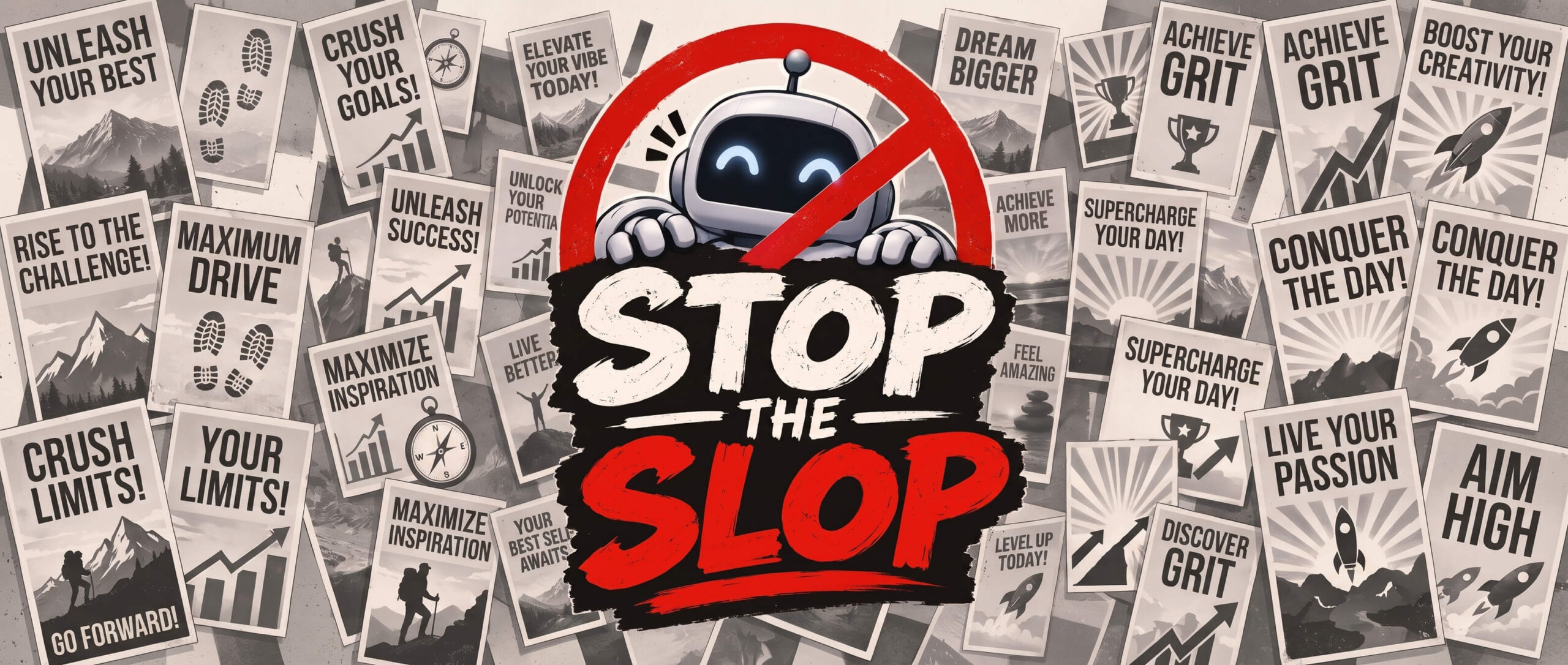
Surely you have heard or read about this before. AI-generated marketing material is drowning in an ocean of AI-generated marketing material. Something you may or may not have noticed is that they all look exactly the same, which makes it very easy to ignore. That’s only the obvious part, the part making designers worldwide have to change their entire reason for being in therapy. Let’s look at what the data says about AI generated content vs content generated by a human professional.
How are either performing
Data from extensive 2026 digital marketing and e-commerce studies from institutions such as Neil Patel’s agency or platform analytics firms like Picmim and Grafit Agency shows a clear divergence in performance:
AI-generated content generally yields more clicks due to rapid testing while original human design significantly wins on conversions. In other words AI-generated content might get likes or a click but human directed content ensures sales, revenue and clients.



The data highlights a clear performance split based on campaign objectives, price points and workflows:
1. Engagement & Click-Through Rate (CTR) Stats
AI excels at capturing attention and minimizing ad fatigue through large volume and testing speed.
- The 12% CTR Advantage: In Meta and Google ad benchmarks analyzing over 50,000 variants fully AI-generated creatives averaged a 1.08% CTR compared to 0.96% for human-created visuals (a ~12% lift)
- Social Media Engagement Split: Across platforms human-designed visuals maintain a baseline 42% higher overall organic engagement rate for trust-heavy content such as product shots and behind-the-scenes imagery. However AI graphics win by 10% to 17% on abstract content such as educational quote cards or conceptual infographics where realism is not required.
- Creative Burnout Rate: AI-generated visuals suffer from a 35% faster creative fatigue onset compared to original human designs. Algorithms and audiences recognize AI compositional patterns faster meaning AI assets require a refresh cadence 1.5x to 2x higher than human art.
- Conversion Rate (CVR) & Trust Stats
When asking a user to actually spend money, human design and emotional resonance consistently beat machine output.
- Absolute Conversion Baseline: Controlled multi-account testing shows human-designed assets yield a 1.54% conversion rate while AI-generated visual ads lag behind at 1.28%.
- The High-Consideration Purchase Drop: For low-ticket items under $100 AI and human conversion rates are the same. However for high-consideration purchases AI visuals convert 8% worse than human design. That gap widens to 14% worse for luxury products or services where consumer skepticism about AI authenticity triggers distrust.
- Industry Specificity: Original human visuals yield up to 5% higher conversion rates in industries relying heavily on emotional resonance and experiential trust such as hospitality, real estate and high-end e-commerce.
Direct Overview: AI vs. Human vs. Hybrid Design
The critical takeaway from current data is that pure AI vs. Pure human is a false choice. The performing campaigns utilize a hybrid model. A human designer directs the strategy and an AI generates the iterative variations which go back to the human designer to format and optimise for different uses. The bottom line here is that AI still needs direction from a professional who understands design, composition and buyer or user psychology to instruct the machine.

Core Strategic Takeaway
If pure AI visuals are used AI will likely get clicks and massive testing scale but conversions on premium or high-trust products will be sacrificed. For conversion human designers should set the creative concept, brand identity and emotional hooks then deploy AI tools to scale out the background text overlay and colour variations.
Although purely AI may be cheaper and faster it ends up getting monkeys for paying peanuts and potentially killing your brand and offering amongst businesses using the same model. With the rise, in AI many designers like myself have opted to integrate AI into their work as a tool leveraging their years of experience and expertise to get the optimal balance, output and response.
Instead of ditching the professionals for the machine allow them to work together to save time and get best results.